Takashi Ninja Samurai Game
- 4.6
- Rating
- 10.00M
- Installs
- Free
- Price

 Analysis by App-foxy
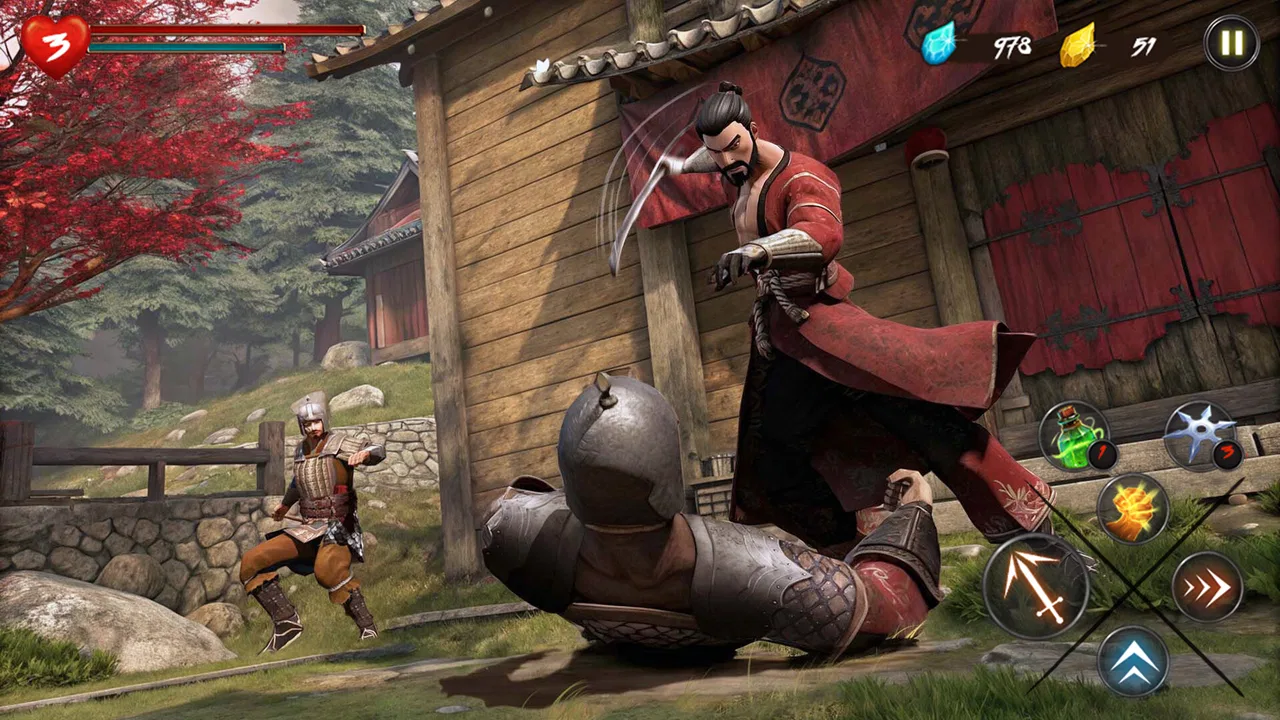
Takashi Ninja caught my attention because it aims for a more focused kind of mobile role-playing experience: direct sword fighting, a ninja theme, and a three-dimensional world rather than a menu-heavy adventure. After spending time with it, I found the strongest part of the game is its immediate physical feel. You are not simply selecting attacks from a list; you are watching distance, choosing when to strike, and learning how to approach enemies without wasting movement. That makes the first sessions feel more involved than the usual tap-through mobile RPG.
The game comes from Horizon Games, Inc. and is free to download, with optional purchases priced from $0.49 to $3.49 per item. It is rated Teen, which is worth keeping in mind if you are choosing something for a younger player. The current version is 3.9.0, and it runs on Android 8.0 or later. Those details make it fairly accessible on older compatible phones, although a three-dimensional action game can still feel more comfortable on a device with a larger screen and responsive controls.
How the game holds up beyond the first week
I find the game’s staying power comes down to whether its focused sword combat continues to feel satisfying after the opening novelty wears off. A useful way to judge that is to notice whether you return because you want to handle fights more thoughtfully, rather than simply out of habit. That distinction also helps clarify what kind of player is likely to get lasting value from it.
You May Also Like

 Blood Strike: 2.5 Anniversary
Blood Strike’s Loadouts Turn Every Drop Into a Tactical Gamble
A close look at Blood Strike’s custom loadouts: how fast access to signature weapons reshapes its battle royale rhythm, rewards preparation, and narrows the gap between fights.

 Pandora - Music & Podcasts
Pandora’s Music Is Easy to Start, but Harder to Recover
Pandora’s strength is its low-effort path from a seed to a station. Its weak spot is how much confidence it asks you to place in connection, setup, and quiet recovery.

 8 Ball Pool
 Is Built on Rivalries, Rematches, and Routine
A close look at the rivalries, rematches, shared routines, and unanswered safety questions that turn a quick pool match into a persistent mobile community.

 Samsung Music
’s Quiet Strength Is Playing What You Already Own
Its reach comes less from spectacle than from dependable access to a personal library. That simplicity is both the app’s strongest retention engine and its ceiling.

 AccuWeather: Weather Radar
AccuWeather Review: A Quick, Clear Forecast for Everyday Decisions
For everyday plans, the best forecast is the one you can understand quickly. AccuWeather makes rain timing, radar, and local conditions easy to act on, with a few trade-offs.

 Hill Climb Racing
Why Hill Climb Racing Still Turns Crashes Into One More Run
A tiny car, a bumpy hill and one more upgrade: Hill Climb Racing keeps resurfacing because its simple chaos makes every near-miss feel personal.
More From Our News Desk
View All News


The first sessions make a strong impression
The opening appeal is easy to understand. The premise puts you in the role of Takashi, a warrior whose path is shaped by combat, and the game quickly establishes a loop of moving through an environment, confronting opponents, and improving your ability to survive the next encounter. I liked that the central fantasy is communicated through play rather than buried under a long explanation. The sword-focused action gives the game a recognizable identity from the beginning.
What helped me stay interested during the first week was the need to read an opponent instead of treating every fight as a damage race. Rushing forward can leave you exposed, while waiting too long can make a battle unnecessarily slow. That small tension gives ordinary encounters more personality. The best moments came when I stopped tapping reactively and began treating each fight as a short positioning puzzle.
The three-dimensional presentation also contributes to the initial pull. Environments feel more substantial than a series of flat battle screens, and moving through them gives the adventure a sense of place. I would not describe the visuals as the sole reason to play, but they support the ninja atmosphere well enough to make the early exploration feel purposeful. The result is a game that is more tactile than many conventional role-playing alternatives on a phone.
New players should resist the temptation to play every encounter at maximum speed. During my first sessions, I found that observing attack patterns and leaving room to retreat was more useful than trying to finish every fight immediately. That habit also reduces the frustration of entering a stronger encounter with poor positioning. It is a simple adjustment, but it changes the game from frantic swiping into something closer to deliberate action combat.
Why the combat deserves attention
The combat is the part I would show to a friend who asked what makes this game different. Its appeal is not that every fight is radically complex; rather, the basic actions gain value from timing and spacing. A player who pays attention can often avoid unnecessary damage, while someone who treats the game like an automatic battle system may find the same encounters rougher than expected.
That design creates a useful middle ground. You do not need the precision of a dedicated console action game, but you also cannot completely ignore what is happening on screen. I enjoyed this balance during short sessions because it gave me something to focus on without demanding a long uninterrupted commitment. A few encounters can feel satisfying after a commute or a break, provided I was in the mood to actively play rather than simply collect rewards.
One practical tip is to separate progression decisions from combat frustration. If a difficult opponent stops your progress, repeatedly charging back in is not always the best response. I had better results when I treated the setback as a signal to improve my approach, revisit earlier areas, or strengthen the character before trying again. That makes the game more forgiving mentally, even when the action itself remains demanding.
Who will enjoy the first-week experience
This is a good fit for someone who wants a mobile RPG with a clear martial-arts flavor and more direct interaction than a fully automated title. It should also appeal to players who enjoy learning enemy behavior and making small improvements through repetition. The first week is especially rewarding if you like the feeling of gradually becoming more competent, not just watching numbers rise.
It is less suitable for anyone looking for a relaxed idle game, a story-first visual novel, or a multiplayer-focused role-playing experience. The combat asks for attention, and the ninja setting may not be enough to compensate if you prefer collecting characters or managing a large team. Players who want a very casual game that can be played almost entirely with one hand may also find the action less convenient than a simpler alternative.
What keeps it useful after novelty fades
The more important question is what remains once the first impression wears off. For me, the answer is the combat loop itself. When I returned after a break, the game was still understandable immediately: move carefully, identify danger, attack with purpose, and avoid turning every encounter into a reckless exchange. That clarity gives it a practical advantage over RPGs that require remembering a large number of systems before a short session can begin.
Its month-to-month value depends heavily on whether you enjoy repeating that loop. The game is not something I would recommend purely as a checklist of content. Its lasting appeal comes from improving execution and continuing through the adventure, not from endlessly discovering unrelated activities. If you like a focused game with a consistent identity, that can be a strength. If you need constant novelty, the same focus may eventually feel narrow.
I also appreciate that the free entry point lets you test the central experience before deciding whether it deserves regular space on your phone. The optional purchases are present, but I would not advise buying anything simply because a particular fight has become irritating. A better approach is to play long enough to decide whether the swordplay is genuinely enjoyable. If the basic combat does not feel good, spending more will not solve that underlying problem.
The game has attracted a broad audience, with over 10 million installs and a 4.7 average from around 140 thousand ratings. Those figures suggest that the format has connected with many players, but they should not replace personal testing. A popular action RPG can still be a poor match for someone who dislikes repeated combat or prefers a more generous pace.
A realistic everyday routine
Imagine having fifteen minutes before an appointment. I would open the game, complete a manageable stretch of combat, and stop at a natural point rather than forcing a long session. That works because the core interaction is easy to resume. I do not need to rebuild a complicated strategy from scratch every time I return, although I still need to pay attention once a fight begins.
For a longer evening session, I would use a different routine. I would first play cautiously to get back into the timing, then attempt more demanding encounters only after my movement felt consistent. This avoids one of the common mobile-game traps: starting with an ambitious challenge, losing repeatedly, and leaving with the impression that the entire game is unfair. The game rewards a measured rhythm more than constant rushing.
Another useful habit is to stop when concentration drops. Because combat depends on reacting to danger, tired play can turn a manageable encounter into a series of avoidable mistakes. I found that short, attentive sessions were more enjoyable than trying to grind through a long stretch while distracted. That is an important part of its maintenance profile: the game is easy to revisit, but it is not completely passive.
Where it differs from familiar RPG alternatives
Compared with idle RPGs, this game gives me more control but demands more involvement. Idle alternatives are better when I want progress in the background, while Takashi Ninja is better when I want the act of fighting to be the reason I opened the app. Compared with menu-driven role-playing games, it offers a stronger sense of physical presence, but it may provide less satisfaction to players who primarily enjoy team building, equipment spreadsheets, or automated optimization.
It also occupies a different space from competitive online RPGs. I would choose this one when I want a self-contained ninja adventure rather than social pressure, rankings, or coordination with other players. On the other hand, someone whose long-term motivation comes from competing against friends may find a multiplayer-centered game more durable. The comparison is not about which format is universally better; it is about whether direct solo combat is enough to keep you returning.
The maintenance burden of regular play
The maintenance burden is moderate rather than overwhelming. The controls and basic purpose are straightforward, so returning after several days away does not feel like reopening a complicated project. That is one of its better qualities as a habit game. I can remember how to play quickly, and the central objective remains visible through the action instead of being hidden behind several layers of menus.
Still, regular play requires attention. This is not an app I would keep open while multitasking, and it is not ideal for moments when I may be interrupted every few seconds. A phone call, a crowded commute, or a noisy environment can make careful combat less enjoyable. The game fits best into short periods when I can look at the screen and respond properly.
Progression can also create a maintenance question: how much repetition are you willing to accept before moving forward? Returning to earlier encounters can be useful for practice and preparation, but it may feel like a chore if you only want continuous story advancement. I recommend setting a personal limit. If a session starts feeling like obligation rather than play, switching activities is healthier than forcing another round.
Because purchases are optional, budget-conscious players can approach the game cautiously. I prefer treating the free version as the real trial period and deciding later whether any small purchase adds meaningful convenience. The price range is relatively low per item, but several small decisions can still add up if made impulsively. The best trade-off is to spend only after confirming that you enjoy the combat enough to keep returning.
The fatigue points that may end a long-term habit
The first source of fatigue is repetition. Focused combat is satisfying when I am learning or overcoming a challenge, but familiar encounters lose some of their impact once I understand them. The game can remain enjoyable if I like refining my execution, yet players who expect every return to introduce a major new idea may eventually feel that the loop is too contained.
The second issue is the gap between action excitement and progression patience. A fight can feel active, while advancement between fights may feel slower or more routine. That contrast is common in mobile role-playing games, but it matters here because the combat encourages me to keep playing even when I may have already reached a natural stopping point. Recognizing that tension helps prevent the game from becoming a time sink.
There is also a physical consideration. Three-dimensional action on a small display can become tiring, especially during longer sessions. I found the experience more comfortable when I used deliberate movements and avoided frantic input. Players with limited screen space or older hardware may prefer a simpler two-dimensional RPG that is easier to read and control for extended periods.
The Teen rating is another practical point for families. I would not hand the game to a younger child without checking whether its tone and combat style fit the household. For teenagers and adults who already enjoy action-oriented role-playing games, the rating is less of a concern, but parents should still make the decision rather than assuming every free game is family-friendly.
How to decide whether it deserves a permanent place
I would keep this game installed if I wanted a solo action RPG that I could revisit without relearning a complicated interface. Its strongest long-term quality is consistency: the swordplay remains the reason to return, and the ninja setting gives that loop a clear identity. I would not keep it installed merely because it is free or popular. The lasting test is whether I still enjoy paying attention to the next fight after the initial visual novelty has disappeared.
For players who prefer deliberate combat, a useful approach is to create small goals instead of playing aimlessly. I might focus on reaching the next meaningful encounter, improving how I handle a particular enemy, or completing a short session without wasting health through reckless attacks. These goals make repetition feel intentional and help reveal whether the game is building a genuine habit or simply filling spare minutes.
I would skip it if I wanted automatic progression, a deep social layer, or a constantly changing collection of activities. I would also look elsewhere if I dislike retrying difficult encounters or if touch-based action feels uncomfortable. In those cases, a more relaxed RPG may provide better month-to-month value, even if it has less immediate sword-fighting appeal.
For everyone else, the free download makes the decision fairly simple: try the combat without treating purchases as a solution to every obstacle. The game is at its best when improvement comes from learning timing and movement. That is the central trade-off, and it is also the reason the experience feels more personal than a typical button-press progression loop.
My long-term verdict
After the novelty fades, Takashi Ninja earns its space only for players who genuinely enjoy its focused combat. I found enough texture in the movement, timing, and gradual improvement to return willingly, especially in short sessions where I wanted active entertainment rather than background progress. The game does not need to be everything at once; its value comes from committing to one clear style and making that style playable on a phone.
My recommendation is therefore positive but specific. Try it if a solo ninja-themed RPG with direct three-dimensional fighting sounds more appealing than an idle or menu-heavy alternative. Keep your expectations realistic about repetition, screen fatigue, and the need to stay engaged. If those trade-offs suit you, this is a free role-playing game with enough combat character to outlast its first-week attraction. If they do not, its popularity and strong average rating will not change the fact that another RPG format may fit your routine better.
The lasting value is in mastering the fight, not merely collecting progress. That makes the game a worthwhile recommendation for patient action-RPG players, but a less convincing choice for anyone seeking effortless daily rewards or endless variety.
FAQs for Takashi Ninja Samurai Game
01What is the main objective of Takashi Ninja Samurai Game?
Takashi Ninja Samurai Game is an action-adventure RPG where players assume the role of a legendary ninja warrior. The main objective is to explore a medieval Japan setting, battle various enemies, and complete missions to restore peace and honor. Players navigate through intricate levels, utilizing stealth, combat skills, and strategic thinking.
02What are the key features of Takashi Ninja Samurai Game?
The game offers a variety of features including an open-world environment, challenging boss battles, and a unique combat system with a wide range of weapons. Players can upgrade their abilities, customize their characters, and experience a compelling storyline. The game also provides stunning graphics and immersive soundtracks that enhance gameplay.
03Is Takashi Ninja Samurai Game free to play?
Yes, Takashi Ninja Samurai Game is free to download and play. However, it includes in-app purchases. These purchases allow players to buy in-game currency, weapons, and other items that can enhance the gaming experience. While optional, these purchases can offer advantages in gameplay.
04What devices are compatible with Takashi Ninja Samurai Game?
Takashi Ninja Samurai Game is available on both Android and iOS platforms. It requires Android 5.0 or later and iOS 10.0 or later for optimal performance. The game is designed to run on a wide range of devices, but older models may experience reduced performance or graphical quality.
05Are there any multiplayer features in Takashi Ninja Samurai Game?
Currently, Takashi Ninja Samurai Game is primarily a single-player experience focused on its rich narrative and combat mechanics. There is no multiplayer mode available. The developers may consider adding multiplayer features in future updates, but for now, players can enjoy the immersive solo adventure.
Pros
- Engaging storyline with rich narrative.
- Smooth and responsive combat mechanics.
- Stunning graphics with detailed environments.
- Variety of weapons and skills to master.
- Challenging missions and boss fights.
Cons
- In-app purchases can be pricey.
- Occasional frame rate drops in busy scenes.
- Requires constant internet connection.
- Limited character customization options.
- Some repetitive mission structures.

Takashi Ninja Samurai Game
Gallery